
Why women need a reminder to put the oxygen mask on first
Physiotherapy Column
VIEW OTHER BAREFOOT PHYSIOTHERAPY BLOGS
We’re living in a culture of hustle. People are working more, carrying more, trying to achieve more, and doing it all at speed. Even the ‘healthy’ things can start to look like another task to complete.
What we see at Barefoot is a lot of brilliance walking through the door.
Thoughtful people. High standards. Bodies that have adapted, compensated, and kept going. And often, the thing that helps most isn’t another push.
This is a reminder. Self-care isn’t a buzzword. It’s a clinical part of sustainable rehab. The brilliance is usually in the slow moments – the ones where you pause, listen, recover properly, and give your nervous system enough safety and consistency to respond.
The quiet version of self-neglect
For many Barefoot clients, self-neglect doesn’t look dramatic.
It doesn’t usually mean ignoring problems for years.
More often it looks like squeezing your rehab into the edges of your day. Treating rest as something you have to earn. Or feeling guilty for taking up clinical time when you’re “not that bad”.
We see this pattern a lot.
It often shows up in people who are capable and conscientious. You tolerate discomfort better than most. You keep walking, keep working, keep showing up.
Eventually the body starts sending louder signals.
Sometimes they’re vague. Sometimes they move around. Often they’re frustratingly non-specific.
Neck tension that keeps returning and turns into headaches.
Hip pain that starts after sitting, but now also after standing.
A shoulder that’s “fine”… until suddenly it isn’t.
Or a general sense that you’re always managing something.
This isn’t you being dramatic.
It’s your nervous system doing its job.
Why this matters clinically
Australian reporting on women’s mental health shows high rates of depression, anxiety and insomnia, along with the pressure many women feel to be hard on themselves.
That matters clinically.
Stress load, sleep quality and self-criticism all influence how the nervous system processes threat and recovery. When those pressures build, the body can become more reactive — even when you’re doing all the “healthy” things.
So when we talk about putting the oxygen mask on first, we’re talking about reducing the background load that keeps your system on alert.
Pain is a protective output, not a personality flaw
Pain is loud, but it isn’t always specific.
It’s a protective output of the nervous system, influenced by lots of different inputs: tissues, load, movement strategy, sleep, stress, previous injury, and the overall sense of safety the system is carrying.
That’s why symptom-chasing can backfire, especially in more complex bodies.
You can treat the sore spot very well and still not get long-term stability if the main drivers are sitting elsewhere.
This is one of the reasons we assess broadly at Barefoot.
We’re not just interested in where it hurts.
We want to understand why the system is behaving this way in the first place.
When you look at pain through that lens, the goal shifts.
It’s no longer about fighting the body or constantly trying to “fix” the sore area.
It becomes about reducing the background load, improving capacity, and helping the system feel safe enough to settle.
That’s what putting the oxygen mask on first is really about.
Why ‘oxygen mask first’ matters in physiotherapy
We can do a lot in a physio session.
But there is also a lot of time between appointments.
And often, what happens in that space matters just as much.
Part of the work is helping you deload your system in a way that is realistic for your life.
That doesn’t mean handing you a long sheet of exercises and hoping for the best.
It means working out what is actually going to be doable, useful, and sustainable.
For many people, self-management is a key part of care.
That might include movement exposure, strength work, pacing, load modification, or practical strategies you can repeat at home.
But self-management only works when it fits into real life.
And that’s where things often break down.
Not because people are lazy.
Because there is too much friction.
For high-functioning, health-invested people, that friction often looks like this:
The plan is too ambitious for your real week
The plan is too vague, so you overthink it
You do everything until you flare, then stop completely
You treat rest like weakness, so recovery never gets protected
You keep choosing the urgent thing over the important thing
Putting your oxygen mask on first means treating adherence like the clinical factor it is.
We protect the conditions that make the plan possible.
Because a perfect plan you can’t keep doing is not actually a good plan.
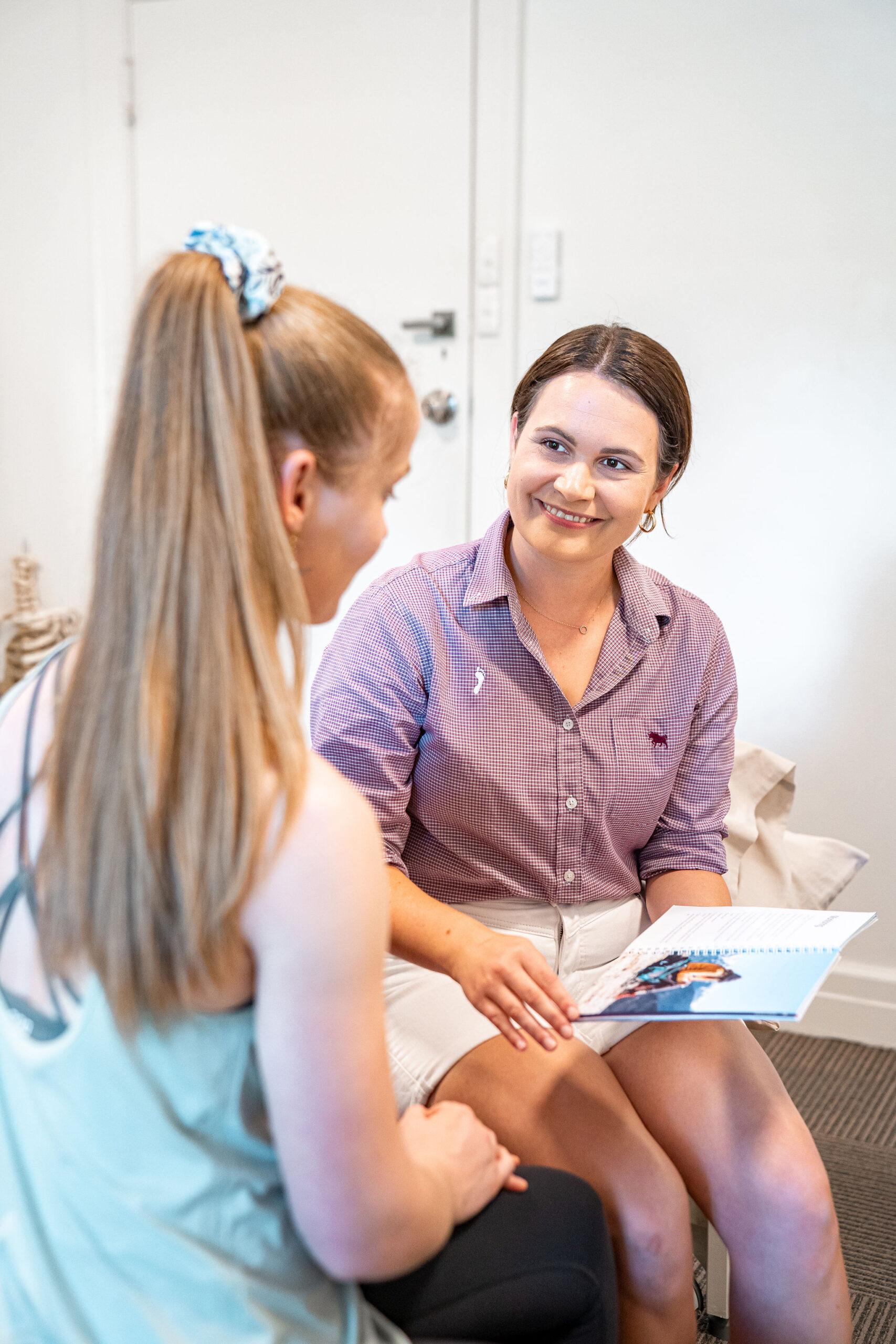
Complex bodies need a different kind of plan
A lot of Barefoot clients have more complex bodies.
That might look like hypermobility. Multi-site pain. Recurring flare-ups. Being “naturally bendy”. Or other health issues that make simple advice feel anything but simple.
In these bodies, generic plans often miss the mark.
Not because the person isn’t trying.
Because the body needs a more thoughtful dose.
Complex bodies often do better with:
strength and control over stretching
slower progression, especially if symptoms flare easily
fewer exercises done well rather than a long list
clear load management
pacing that takes nervous system sensitivity into account
a plan that fits your actual life, not an ideal one
This is where detail matters.
Assessment matters.
Objective testing matters.
And clinical reasoning matters.
Because if a body has been adapting for years, the answer is rarely to just do more.
Usually it’s about doing the right things, at the right dose, in the right order.
What ‘oxygen mask first’ looks like for Barefoot clients
For our Barefooters, this isn’t about vague advice to “rest more”.
It’s about making the plan sustainable enough to hold over months and years, not just during a motivated fortnight.
1) Choose consistency over intensity
If you already do Pilates, walk regularly, or invest in your health, you already understand that progress comes from practice.
Rehab works the same way.
A moderate plan done consistently will usually beat a heroic plan done occasionally.
We often look for the smallest effective dose.
Not because you can’t do more.
Because sustainable usually wins.
2) Put recovery in the plan, not outside it
Recovery isn’t separate from the intervention.
It is part of the intervention.
That might mean spacing sessions differently. Building in easier days. Choosing a walking dose that supports your baseline instead of constantly testing it. Or making sure your week has enough room for your body to actually respond.
Recovery is not wasted time.
It’s often the thing that allows the work to land.
3) Stop treating flare-ups as failure
Flare-ups are common, especially in more reactive or complex systems.
They do not mean you are back at square one.
Usually they mean the system has hit a limit.
Too much load. Too little sleep. Too many consecutive stressors. A progression step that was slightly too big. Or a week that asked too much of you from too many directions.
The goal is not to panic when that happens.
The goal is to respond calmly, adjust the dose, and keep the longer-term direction steady.
Over time, we are aiming for flare-ups that are less frequent, less intense, and easier to recover from.
That is still progress.
4) Make the plan specific enough to trust
If you’re analytical, vague advice is exhausting.
Your brain fills in the gaps.
A good plan should tell you:
What to do
How often to do it
What to expect
What to change if things flare
Clarity matters.
Because clarity reduces guesswork.
And when there is less guesswork, people usually move with more confidence.
A quick note on LGBTQIA+ bodies and care
Barefoot sees a high number of LGBTQIA+ clients.
It is worth naming, because healthcare is not always experienced as neutral or safe, and that changes how comfortable people feel asking questions, being examined, or even booking in the first place.
We don’t need to make this a big performance.
We just want to be clear about what we do.
We use inclusive language.
We respect names and pronouns.
We treat consent and comfort as part of good clinical care.
And we understand that when people feel safe and respected, they can engage more fully in the process.
That matters in any long-term rehab plan.
It’s not a side issue.
It’s part of clinical reality.
If this is you, here’s your starting point
If you’re someone who is doing a lot of the ‘right’ things and still feels like your body is reactive, you’re not failing.
And you’re not making it up.
Often it just means the plan needs to be more specific, more realistic, and better matched to the body you actually have.
That’s the work we do at Barefoot.
Whole-person assessment. Objective testing. Nervous system-aware pacing. Tailored plans built for real humans with real lives.
You do not need to do everything.
You need a plan you can keep doing.
We walk with you.
If you’re ready for a plan that works with your body rather than against it, you’re welcome to book a session with one of our Barefoot physiotherapists.
Book online or call 1300 842 850.
FAQs
What makes Barefoot different?
Barefoot looks at the whole person, not just the sore spot. That means detailed assessment, objective testing, careful clinical reasoning, and plans designed for long-term sustainability rather than quick fixes.
Can a physio plan help if my body is hypermobile or complex?
Yes. Complex bodies often need slower progression, more precise strength and control work, and plans that are dosed realistically. The goal is not to overwhelm the system. It’s to build capacity in a way the body can actually respond to.
Why do I flare even though I already do Pilates and walk regularly?
Because flare-ups are not always about fitness. They can also be shaped by load, end-range control, pacing, sleep, stress, and nervous system sensitivity. A detailed assessment helps work out what is driving the pattern in your body.
Do I need to stop everything when symptoms flare?
Not usually. Flare-ups often respond better to a calm adjustment in dose than total rest or pushing through. Your plan should include clear guidance on what to keep doing, what to scale back, and how to move through a flare without losing confidence.
Is Barefoot inclusive for LGBTQIA+ clients?
Yes. Barefoot provides respectful, informed, inclusive care. That includes using inclusive language, respecting names and pronouns, and treating consent and comfort as part of good clinical practice.